
Bhotekoshi Flood Response Moves to Search and Recovery:
What the Government’s Decision Means for Affected Families
Kathmandu, 30 September 2026 (Asoj 14, 2083)
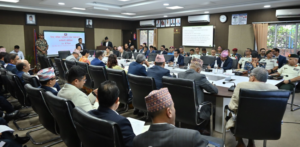
Image Source – NDRRMA (https://ndrrma.gov.np/np/news/240)
The Government of Nepal has decided to move the Bhotekoshi flood response from search and rescue to search and recovery. The decision was taken today at the 37th meeting of the Disaster Risk Reduction and Management Executive Committee, chaired by Home Minister Sudhan Gurung. It follows recommendations from the teams deployed in the field and from the District Security Committees, and searches will continue at locations where they are still considered essential.
More than a month has passed since the flood struck Rasuwa on 26 August (Bhadra 10, 2083). According to the latest daily figures from the National Disaster Risk Reduction and Management Authority (NDRRMA), dated 26 September, 1,453 people have died and 5,285 remain missing. For the families of the missing, the meeting set out a clearer process. Local governments where a missing person had their permanent address will verify that person’s details and send them to the District Administration Office, which will verify them again and forward them to NDRRMA. The Ministry of Law, Justice and Parliamentary Affairs is also working on amendments to the law so that citizens missing in the flood can be declared dead or equivalent to dead. This is a difficult step for families still waiting for news, but legal recognition can affect their access to compensation and their ability to settle property and inheritance matters.
The meeting also decided to build transitional shelters at potentially safe sites identified by a government committee. The Ministry of Infrastructure Development will lead this work, and partner organisations will be mobilised to support it. As of 26 September, 1,109 people were still living in 21 holding centres, 805 of them in Rasuwa, so safe and decent temporary housing remains one of the most pressing needs in the affected districts.
Looking ahead
The move to recovery marks a new stage for families in Rasuwa, Nuwakot and Dhading, many of whom will spend the coming winter in temporary shelters. RRN welcomes the government’s recognition of the role played by non-governmental organisations, volunteers and communities during the response. It will continue to work with local governments, District Administration Offices and NDRRMA so that its support reaches the households identified as most in need, and to coordinate with partners on shelter, livelihoods and protection as recovery planning moves forward.