
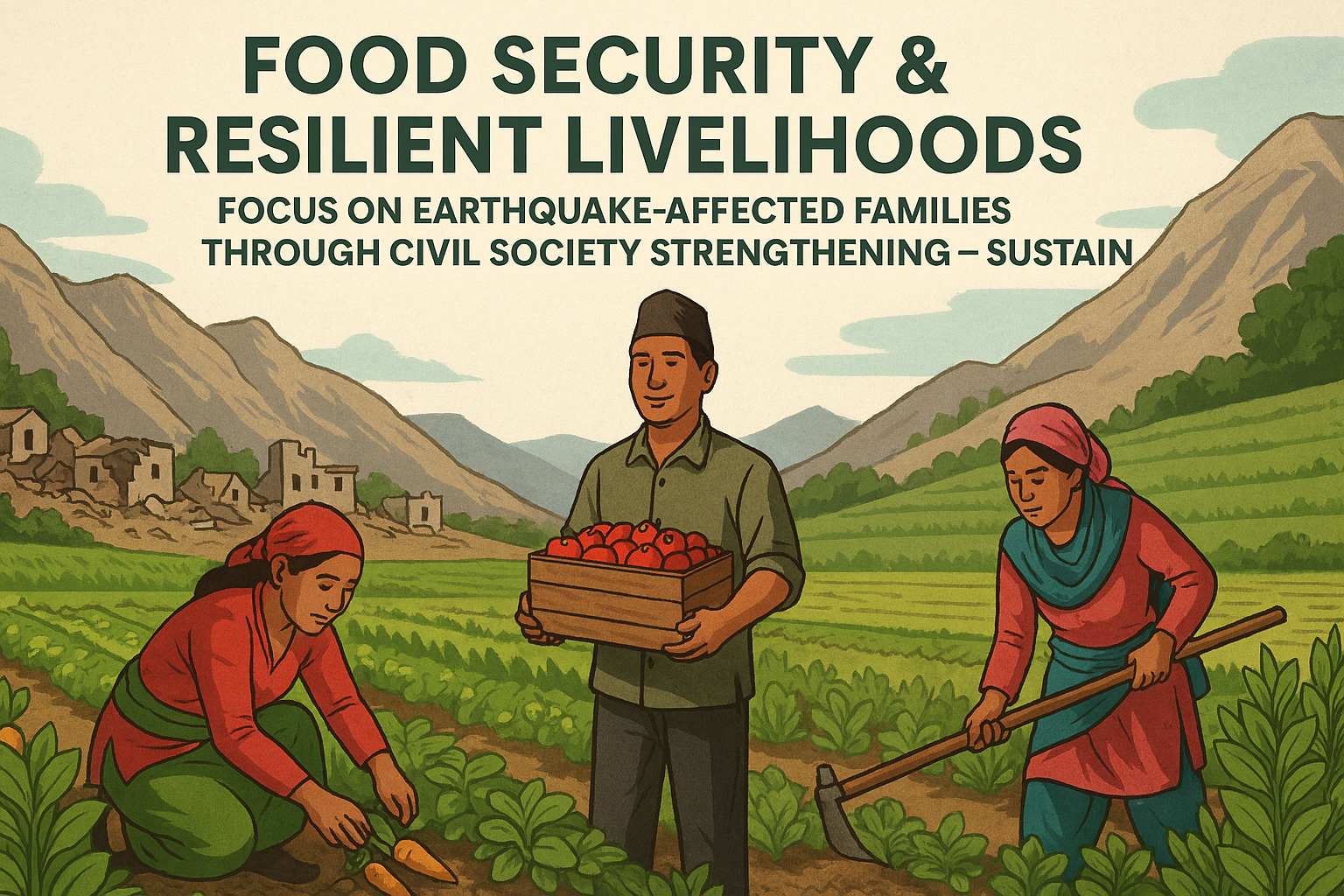
The project aims to increase food and nutrition security of earthquake affected households in Jajarkot and Rukum West district and the civil society and local governments promote climate resilient and nutrition sensitive agriculture and economic resilience programs.
Approach
The project follows the following approaches and tools to achieve its objectives:
- Sustainable Integrated Farming System (SIFS)
- Participatory Learning and Action Linking Agriculture and Natural Resource Management towards Nutrition security (PLA LANN+)
- Green enterprises development
- Food and Nutrition Policy Advocacy
Implementing Partners
Nepal Magar Society Service & Information Center (MIC Nepal) and Fair Trade Group Nepal (FTG Nepal)
Project outputs
Output 1: 1,750 earthquake affected households have technical capacities (knowledge and skills), availability and access to agricultural inputs and services for the adoption of climate resilient locally diverse food systems
Output 2: On farm, off-farm and non-farm enterprises provide income-generating and employment opportunities to local youth and women.
Output 3: Civil Society Organizations (CSOs) and their networks engaged in the agriculture sector to advocate and promote climate resilient and nutrition-sensitive agriculture at municipal and provincial level.
Output 4: Two targeted local governments have strengthened their capacity to promote climate resilient and nutrition-sensitive agriculture and implement appropriate policies and programmes