
Kapilvastu, one of Nepal’s major grain‑producing districts, has long been known for its fertile Terai plains, where rice and wheat dominate local livelihoods. In recent years, vegetable, fruit, and commercial farming have also grown in importance. Despite this agricultural potential, irrigation remains a critical challenge. Many farmlands have become barren due to the lack of reliable water sources, and changing rainfall patterns driven by climate change have resulted in prolonged droughts and declining groundwater levels. Farmers increasingly depend on groundwater extraction, further deepening the crisis and highlighting the urgent need for groundwater recharge and surface‑water solutions.
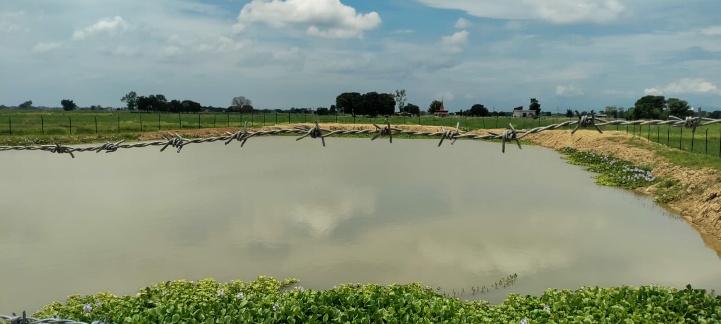
To address this issue, the project supported the construction of the Chikani Irrigation Pond. The pond was designed to provide a dependable irrigation source to surrounding command areas by storing surface water and supplying it through pumping systems to farmers who previously relied solely on rainfall and groundwater.
The impact of this intervention became especially clear during this year’s peak rice‑planting season. Delayed monsoon rains and critically low groundwater levels created a severe water shortage, leaving many farmers at risk of missing the crucial planting window, threatening both their food security and income. The Chikani Irrigation Pond proved transformative. By providing timely irrigation water, the pond enabled farmers to transplant rice on schedule. It also ensured continuous moisture in fields where deep cracks had developed due to extended dry periods, helping sustain healthy crop growth despite unfavorable conditions.
Local farmer Arjun Ahir, from the Jahadi community, shared his experience:
“Earlier, we depended entirely on rainfall. At first, the pond could not hold enough water, but after proper management, it now collects and stores sufficient water for irrigation. This year, we irrigated our rice fields on time because of the pond, and we expect a better harvest. With improved access to water, we now hope to cultivate crops throughout the year.”
The success of the Chikani Irrigation Pond demonstrates how climate‑resilient infrastructure can revitalize agriculture, restore productivity to once‑barren lands, and strengthen community resilience. By improving year‑round access to irrigation, the pond is contributing to higher agricultural yields, improved livelihoods, and a more sustainable local economy offering a model for scalable water‑management solutions in the Terai.