
Sabita Lamichhane, a 35‑year‑old resident of Ward No. 5 in Buddhabhumi Municipality, has been serving as the Chairperson of the Milijuli Farmer Group for the past 1.5 years.
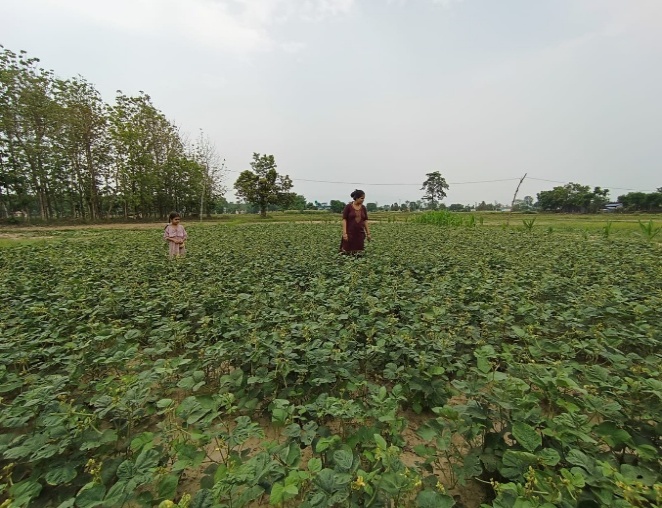
In Kapilvastu, large areas of farmland traditionally remain fallow after the harvest of wheat, mustard, and potatoes. Continuous monocropping of rice and wheat, limited use of legumes, and over‑reliance on chemical fertilizers have led to declining soil productivity and increased susceptibility to pests. Through the Good Agricultural Practices (GAP) sessions, JTAs emphasized the benefits of integrating legumes into cropping systems to improve soil fertility and sustainability. Motivated by the concept of “khana pani hune, mal pani hune” (food and fertilizer benefits), Sabita decided to cultivate mungbeans on her 2 katthas of land that typically remained unused during Chaitra–Jestha.
With technical guidance and continuous support from the project’s agricultural technicians, Sabita attempted mungbean cultivation for the first time. Despite her initial hesitation, she successfully harvested around 70 kg of mungbean, a significant achievement for previously fallow land. Reflecting on her experience, she shared, “Since it was my first time growing mungbeans, I was unsure about the process. But the regular monitoring and technical support from the organization helped me achieve a good yield.”
Sabita’s initiative quickly drew the attention of neighboring farmers and even local officials. Members of the Milijuli Farmer Group expressed interest in adopting mungbean cultivation, and the Chairperson of Ward No. 5, Rom Bahadur Thapa, expressed his intention to plant mungbeans on his unused land next year. Sabita further encouraged adoption by sharing part of her harvest and raising awareness about the crop’s nutritional value, soil‑enhancing properties, and economic benefits.
Looking ahead, Sabita hopes to continue improving her farming practices and adopt additional technologies and skills promoted by the project. As she explains, “Rather than letting land remain fallow, we should promote legume crops like mungbean. Although it requires irrigation and pest management, it improves nutrition, livelihoods, and soil fertility. I am also excited to see the results of rice cultivation on legume‑incorporated land, as explained by the JTAs.”
Sabita’s experience demonstrates how knowledge, technical support, and simple shifts in cropping practices can improve soil health, diversify production, and inspire wider community adoption—contributing to more resilient and sustainable agriculture in Kapilvastu.